If you’re planning commercial air conditioning installation in Denver, you already know this isn’t a plug‑and‑play market. Our altitude, wide temperature swings, and evolving local energy codes make system selection and design feel different than those in most cities. We’ve installed and commissioned systems across the Front Range for offices, labs, retail, schools, and mixed‑use buildings, and the pattern is clear: the right plan upfront saves real money and headaches later. Below, we break down what’s unique about Denver, how to choose the right equipment, and how to deliver a project that’s comfortable, compliant, and efficient for the long haul. Let Aspen Creek Heating and Air provide your business with the commercial air conditioning service you need.
What Makes Denver Installations Unique
Climate, Altitude, and Weather Extremes
At 5,280 feet, air density drops roughly 17% versus sea level. Fans, compressors, and gas heat don’t behave the same here. We account for altitude derating on DX equipment, adjust fan curves, and specify larger coils or higher‑capacity units when needed. Denver’s climate also swings: a 35°F morning can turn into an 80°F afternoon, and shoulder seasons are real. Economizers shine in this environment; cool, dry nights deliver lots of free cooling, while low humidity reduces latent loads but increases static electricity and IAQ concerns.
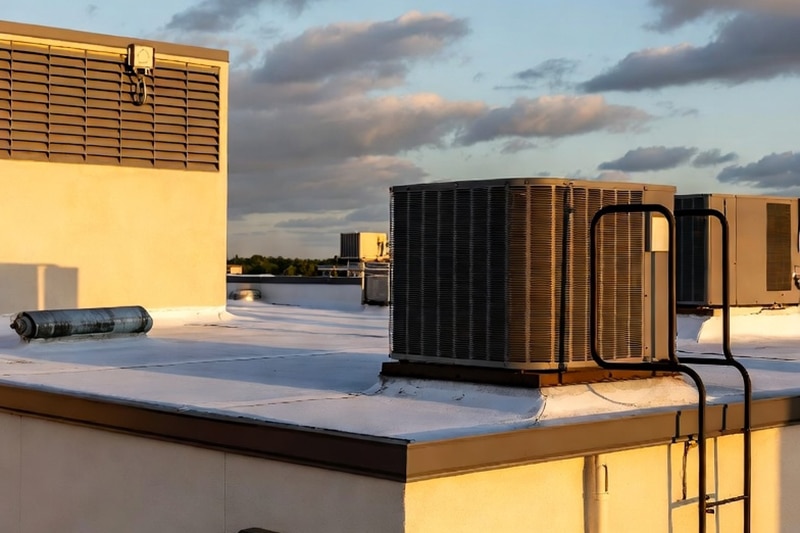
Weather resilience matters. RTUs and condensers are exposed to intense UV, hail, and sudden microbursts. We commonly add hail guards, heavier‑gauge coils, wind screens, and snow stands. For roofs, we design clearances for drifting snow and ensure condensate lines won’t freeze.
Local Codes, Permits, and Inspections
Denver operates under the Denver Building and Fire Code, with a Denver Energy Code that is based on and, in many cases, more stringent than the IECC 2021. We plan for:
- Mechanical permits through Denver Community Planning & Development (CPD)
- Electrical, structural, and crane/street‑use permits, where applicable
- Smoke control and special inspections for certain high‑rise or assembly use cases
Energize Denver sets performance targets for larger existing buildings, pushing owners toward lower EUI. That influences system choice even for new installations; what we install now must help meet those operational targets.
Energy Efficiency and Sustainability Expectations
Across Denver, stakeholders expect high efficiency without sacrificing comfort. That means baseline features like demand‑controlled ventilation, high‑efficiency heat pumps where feasible, advanced economizers, and low‑leak ductwork. We also look at heat recovery (ERV/HRV) and electrification readiness. For mission‑critical or lab spaces, we balance energy with strict ventilation and filtration needs, often leveraging VAV with reheat or VRF with DOAS to thread the needle.
Selecting the Right System for Your Building
Rooftop Units (RTUs) and Packaged Systems
For retail, flex industrial, and many mid‑rise offices, RTUs remain cost‑effective and serviceable. In Denver, we prefer high‑efficiency packaged units with:
- Low‑leak, double‑wall construction
- High‑turndown gas heat or heat pump configurations with cold‑climate ratings
- Advanced economizers with comparative enthalpy sensors
- Factory hail guards and coil coatings
We size for altitude, verify actual fan performance using the manufacturer’s high‑altitude tables, and dial in controls to avoid short‑cycling during shoulder seasons.
VRF/VRV for Zoned Comfort and Retrofits
Variable refrigerant systems excel in buildings needing tight zoning, tenant improvements, historic retrofits, medical suites, and schools. Benefits we see in Denver:
- Heat recovery between zones reduces winter gas use and supports Energize Denver goals
- Smaller shafts and less ductwork suit tight buildings
- Quiet indoor units help in classrooms and clinics
We pair VRF with a dedicated outdoor air system (DOAS) for code‑compliant ventilation and humidity control. Refrigerant charge limits, leak detection in certain occupancies, and cold‑weather heating performance drive the design.
Chilled Water, Evaporative, and Hybrid Options
For larger footprints, labs, data‑lean office towers, and higher education, chilled water offers scalability and plant efficiency. Air‑cooled chillers are simpler: water‑cooled plus cooling towers deliver top efficiency but add water management and winterization requirements.
Denver’s dry air makes evaporative cooling attractive, especially for warehouses and sports facilities. Direct evap can slash energy use, but we plan carefully for water quality, blowdown, legionella control, and freeze protection. Hybrid systems, evap pre‑cooling on condensers, or heat pumps with gas or electric trim heat, can hit performance and resiliency targets without over‑complicating O&M.
Design Essentials: Load, Ventilation, and Controls
Accurate Load Calculations and Envelope Factors
Altitude changes everything from air density to coil performance. We run Manual N/ASHRAE load calcs with Denver weather files (TMY3) and apply high‑altitude correction to equipment data. Real‑world envelope inputs, glazing SHGC, roof reflectance, infiltration testing, and shading often shift capacity by 10–20% relative to rule‑of‑thumb estimates. We also model part‑load operation because most hours live there, not at design peak.
Ventilation, Filtration, and Indoor Air Quality
We design to the Denver Energy Code, IMC, and ASHRAE 62.1, using demand‑controlled ventilation to keep CO2 levels in check while trimming energy use. MERV 13 is the new normal: some healthcare and lab areas push higher. With Denver’s wildfire smoke days, we build in filter upgrade pathways and consider dedicated filtration modes. Humidification is sometimes warranted to improve winter IAQ and comfort; steam or adiabatic options depend on water quality and maintenance tolerance.
Zoning, Controls, and Building Automation
We right‑size zoning to tenant use; conference‑heavy floors need reheat or VRF zones; open offices can be larger. On controls, we standardize naming, points lists, and sequences so your BAS is maintainable. Key sequences we carry out:
- Optimized economizer with high‑limit logic
- Optimal start/stop and supply air reset
- Static pressure reset in VAV systems
- Fault detection and diagnostics (FDD) hooks for trending
Cybersecurity and remote access get early attention, so IT isn’t a late‑stage roadblock.
From Permit to Commissioning: The Installation Timeline
Preconstruction Planning and Plan Review
We start with a site walk, utility coordination, structural review (curbs, dunnage, roof loading), and a code compliance check. Our submittals include equipment altitude adjustments, control sequences, and phasing. For occupied buildings, we map out cutovers to avoid downtime and arrange temporary conditioning if needed.
Permitting with Denver CPD typically runs 2–8 weeks, depending on project complexity. Early completeness avoids re-review cycles.
Startup, Testing, and Owner Training
Factory startup (where required), refrigerant weigh‑in, and balancing come before integrated functional testing. We verify:
- Airflow, superheat/subcooling, and gas pressure (if applicable)
- Economizer operation and freeze protection
- BAS points, alarms, and trending
- Ventilation rates and pressurization
We wrap with owner training, O&M documentation, and a seasonal check after the system has seen Denver’s winter and summer modes.
Choosing a Qualified Denver Contractor
Look for a contractor who:
- Designs with Denver altitude and climate in mind (and can show their corrections)
- Has proven CPD permit experience and commissioning capability
- Offers in‑house controls or tightly coordinated BAS partners
- Provides lifecycle thinking, maintenance plans, parts access, and energy support
Ask for local references with similar building types. The right team shortens timelines and lowers the total cost of ownership.
Budgeting, Incentives, and Lifecycle Costs
Key Cost Drivers and Value Engineering
Major drivers include equipment type and efficiency tier, structural steel and curb modifications, electrical service upgrades, controls integration, and crane logistics. In Denver, hail protection, snow stands, and economizer upgrades are smart spends. We approach value engineering by protecting capacity, IAQ, and controls while trimming non‑critical aesthetics or aligning equipment selections to quick‑ship programs.
Utility Rebates, Tax Incentives, and Grants
Xcel Energy offers prescriptive and custom rebates for high‑efficiency RTUs, VFDs, advanced controls, energy recovery, and heat pumps. For many projects, custom rebates tied to energy modeling deliver more value than prescriptive.
Federal incentives help too:
- Section 179D tax deduction for energy‑efficient commercial building improvements (larger benefits with prevailing wage + apprenticeship compliance)
- IRA/DOE grants for electrification and efficiency in specific sectors
- Colorado C‑PACE financing for eligible efficiency and renewable upgrades
We stack rebates, tax benefits, and financing early so they inform design, not as afterthoughts.
Energy Modeling, Payback, and Risk Mitigation
We use calibrated energy models to compare options, say, high‑efficiency RTUs vs. VRF+DOAS vs. air‑cooled chiller. The model quantifies energy, demand charges, maintenance, and carbon, giving you a clear payback window. To control risk, we run sensitivity analyses (utility rates, operating hours, future code changes) and include operational “off‑ramps” like reheat lockouts and adjustable setpoint deadbands.
Maintenance and Performance Optimization
Preventive Maintenance and Seasonal Tasks
Denver demands seasonal attention. In spring, we clean coils, verify economizers, and check hail guards. Pre‑winter, we test heat, drains, and snow/ice controls. Filters (MERV 13+) need regular changes, and belts, bearings, and vibration checks keep fans honest. For evaporative systems, we inspect sumps, purge cycles, and water treatment to prevent scale and biological growth.
Monitoring, Analytics, and Fault Detection
We trend key metrics, supply air temp, static pressure, compressor runtimes, valve positions, and ventilation rates. Built‑in FDD or BAS analytics catch stuck economizers, simultaneous heat/cool operation, and sensor drift before they hit comfort or the utility bill. We set alert priorities so your team isn’t drowned out by noise.
Continuous Commissioning and Retrofits Over Time
Buildings change, tenants add people and equipment, schedules shift, and codes evolve. We schedule tune‑ups, rebalance as needed, and revisit setpoints. When retrofits make sense, we target high‑yield upgrades: VFDs on fans and pumps, advanced rooftop controls packages, ERV add‑ons to packaged units, and, where feasible, heat pump conversions. These steps keep you aligned with Energize Denver targets while protecting comfort.
Conclusion
Commercial air conditioning installation in Denver rewards careful planning and punishes guesswork. When we account for altitude, codes, and climate from day one, and pair the right equipment with smart controls, the result is a system that’s comfortable, efficient, and easy to live with. If you’re weighing RTUs versus VRF, considering electrification, or just trying to navigate permits and rebates, we can help map a clear path from concept to commissioning and beyond. Your building, and your future utility bills, will thank you.
