
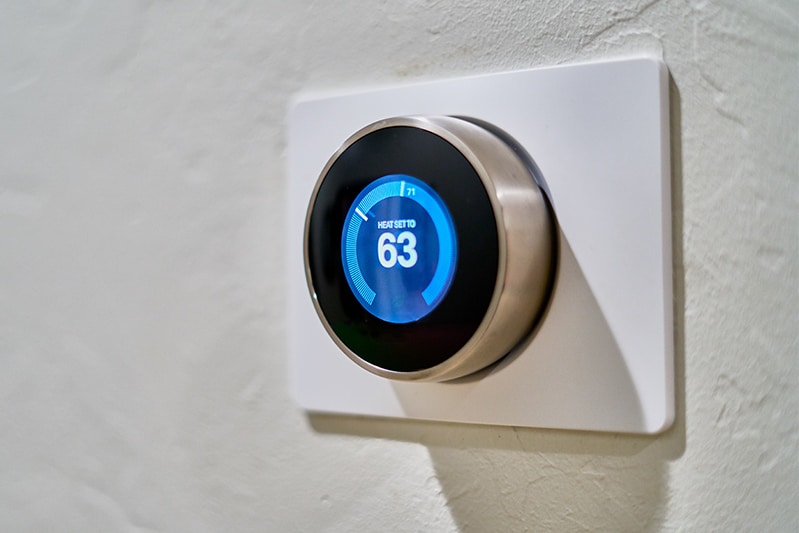
If you’ve ever opened your energy bill and felt a little pang of dread, you’re not alone. Heating and cooling costs account for nearly half of the average home’s energy consumption, and that number tends to climb when the weather gets extreme. But here’s the good news: a programmable thermostat is one of the simplest upgrades you can make to start cutting those costs almost immediately.
We’ve seen firsthand how small changes in home comfort systems can lead to big savings over time. A programmable thermostat does exactly what its name suggests, it lets you set specific temperatures for different times of the day, so your HVAC system isn’t working overtime when no one’s home. It’s a straightforward concept, but the impact on your wallet (and your carbon footprint) can be significant.
In this guide, we’ll walk you through how these devices work, what features matter most, and how to get the maximum return on your investment. Whether you’re replacing an old manual thermostat or considering a smart upgrade, understanding the mechanics behind energy savings will help you make the right choice for your home.
Understanding How Programmable Thermostats Work
At its core, a programmable thermostat is a timing device connected to your heating and cooling system. Unlike a traditional thermostat that maintains a constant temperature until you manually adjust it, programmable models allow you to create schedules that automatically raise or lower the temperature based on your daily routine.
Here’s the basic principle: your HVAC system consumes the most energy when there’s a large gap between the indoor temperature and your desired comfort level. By programming setbacks, periods when the temperature is allowed to drift a few degrees, you reduce the workload on your furnace or air conditioner during hours when you’re asleep or away from home.
Most programmable thermostats fall into a few categories:
- 7-day models let you set different schedules for each day of the week
- 5+2 models offer one schedule for weekdays and another for weekends
- 5-1-1 models provide weekday programming with separate Saturday and Sunday schedules
The thermostat communicates directly with your HVAC equipment through low-voltage wiring. When the ambient temperature drifts outside your programmed range, the thermostat signals the system to turn on. Once the target temperature is reached, it shuts off. This on-off cycling is normal, but a well-programmed schedule minimizes unnecessary cycles.
One thing we often explain to homeowners is that programmable thermostats don’t magically make your furnace or air conditioner more efficient. What they do is ensure your system runs only when it needs to. That distinction matters. A high-efficiency Rheem furnace paired with a properly programmed thermostat, for instance, is going to perform better than the same furnace running around the clock because someone forgot to turn down the heat before leaving for work.
Key Features That Drive Energy Savings
Not all programmable thermostats are created equal. The features they offer can dramatically affect how much you actually save, and how much effort it takes to get there.
Scheduling and Temperature Setbacks
The scheduling function is the bread and butter of any programmable thermostat. The Department of Energy suggests that you can save about 1% on your energy bill for every degree you set back the thermostat for an eight-hour period. That might not sound like much, but consider this: setting your thermostat back 7-10°F for eight hours a day can save you up to 10% annually on heating and cooling costs.
Effective scheduling typically involves four periods:
- Wake – The temperature adjusts to your comfort level before you get out of bed
- Away – The system eases off while the house is empty
- Return – Heating or cooling ramps up before you arrive home
- Sleep – A slight setback during nighttime hours when you’re bundled under blankets anyway
The key is consistency. Random schedule changes or constant manual overrides defeat the purpose. We recommend treating your programmed schedule as the default and only adjusting for genuine exceptions.
Smart Learning and Adaptive Technology
Newer smart thermostats take things a step further. These devices use algorithms and sensors to learn your habits and preferences over time. After a few weeks of observation, they begin making automatic adjustments, sometimes before you even realize you wanted them.
Some smart models include occupancy sensors that detect when someone is home and adjust accordingly. Others connect to local weather data and anticipate temperature changes, pre-heating or pre-cooling your home to maintain comfort without energy spikes.
Geofencing is another popular feature. Using your smartphone’s location, the thermostat knows when you’re approaching home and starts adjusting the temperature so it’s comfortable when you walk through the door. It also recognizes when everyone has left and shifts into energy-saving mode.
These adaptive features are particularly helpful for households with unpredictable schedules. If your work hours vary or you travel frequently, a learning thermostat removes the guesswork and optimizes energy use automatically.
How Much Can You Save on Energy Bills?
Let’s talk numbers, because that’s really what this comes down to.
According to ENERGY STAR, homeowners can save an average of per year simply by using a properly programmed thermostat. But, actual savings depend on several factors: your local climate, the efficiency of your HVAC system, the size of your home, and your current thermostat habits.
If you’re coming from a manual thermostat that you rarely adjusted, your savings could be significantly higher. Some studies suggest savings in the range of 10-15% on heating bills and 15% on cooling bills for consistent users. In colder climates like Colorado, where furnaces work hard during winter months, those percentages translate to real dollars.
Here’s a rough breakdown for a typical household:
| Scenario | Estimated Annual Savings |
|---|---|
| Mild climate, moderate usage | $30-$50 |
| Cold winters, gas furnace | $100-$180 |
| Hot summers, heavy AC use | $80-$150 |
| Extreme climate (both seasons) | $150-$250+ |
Of course, these figures assume your HVAC system is in good working order. An aging furnace or an air conditioner that’s overdue for maintenance won’t perform optimally regardless of how well you program your thermostat. If your system is struggling, it might be time to consider an upgrade. Modern high-efficiency furnaces and heat pumps can cut energy consumption dramatically when paired with smart temperature management.
We’ve helped homeowners in Broomfield and the greater Denver metro area make these upgrades, and the combination of a new efficient system plus a programmable thermostat often pays for itself within a few years.
Best Practices for Maximizing Savings
Installing a programmable thermostat is a great first step, but getting the most out of it requires some intention. Here are the practices we recommend:
Set realistic temperature goals. The temptation is to program aggressive setbacks, but going too extreme can backfire. If your home gets too cold overnight, your furnace has to work harder (and longer) to recover in the morning. A setback of 7-10°F is the sweet spot for most homes.
Don’t override constantly. Every time you manually bump the temperature outside of your schedule, you’re chipping away at potential savings. If you find yourself overriding frequently, that’s a sign your schedule needs adjustment, not that the thermostat isn’t working.
Consider your HVAC system’s limitations. Heat pumps, for example, operate differently than gas furnaces. They’re more efficient when maintaining a steady temperature than when recovering from deep setbacks. If you have a heat pump, smaller setbacks with longer lead times work better.
Position the thermostat correctly. This is often overlooked. Your thermostat reads the temperature of its immediate surroundings, so placing it near drafty windows, direct sunlight, or heat-producing appliances will throw off its readings. Interior walls, away from direct airflow, are ideal.
Pair with regular HVAC maintenance. A clean air filter and a well-tuned system respond more efficiently to thermostat signals. We recommend annual tune-ups for both your heating and cooling equipment. It’s a small investment that keeps everything running smoothly.
Use companion features. Many smart thermostats offer energy reports showing your usage patterns. Review them monthly. You might discover that small tweaks, like adjusting your return time by 15 minutes, can squeeze out extra savings without affecting comfort.
Common Mistakes to Avoid
Even with good intentions, it’s easy to undermine your programmable thermostat‘s effectiveness. Here are the mistakes we see most often:
Cranking the temperature for faster heating. Setting your thermostat to 80°F won’t heat your home any faster than setting it to 70°F. Your furnace delivers heat at the same rate regardless. All you’re doing is ensuring it runs longer than necessary, and potentially overshooting your comfort zone.
Forgetting to update schedules seasonally. Your winter routine probably differs from your summer one. Daylight hours change, activity patterns shift. Take a few minutes at the start of each season to revisit your programming.
Ignoring the hold/vacation feature. Going on a trip? Most programmable thermostats have a vacation mode that maintains a minimal temperature (enough to prevent pipe freezing or excessive humidity) without running full schedules. Forgetting to activate this means your system keeps cycling as if you’re home.
Installing in a bad location. We touched on this above, but it bears repeating. A thermostat in the wrong spot will constantly misread temperatures and either overwork or underwork your system. If yours is mounted near the kitchen, in a hallway with poor airflow, or next to a south-facing window, consider having it relocated.
Not replacing batteries. It sounds trivial, but a dead battery can cause your thermostat to lose its programming or fail to communicate with your HVAC system. Most models need new batteries once a year or so. Set a reminder.
Assuming “set it and forget it” means forever. Your life changes. Kids grow up and move out, work schedules shift, you retire. Revisit your thermostat settings at least annually to ensure they still match your actual routine.
Choosing the Right Programmable Thermostat for Your Home
With dozens of options on the market, picking the right thermostat can feel overwhelming. Here’s how we suggest narrowing it down:
Start with compatibility. Not every thermostat works with every HVAC system. If you have a heat pump, a multi-stage furnace, or a dual-fuel system, make sure the thermostat you’re considering supports it. Check the manufacturer’s compatibility tool or consult with an HVAC professional.
Assess your tech comfort level. Smart thermostats with learning features and app connectivity are fantastic, if you’ll actually use them. If you prefer simplicity, a basic 7-day programmable model might serve you better. There’s no point paying for features you won’t engage with.
Think about your household’s schedule. Families with predictable routines can thrive with straightforward scheduling. Households where everyone comes and goes at different times benefit more from occupancy sensing or geofencing.
Consider the interface. Some thermostats have touchscreens: others use buttons. Some are controlled primarily through apps. Make sure the interface feels intuitive to you and anyone else in the household who’ll be using it.
Budget accordingly. Basic programmable thermostats run $25-$50. Mid-range smart thermostats with Wi-Fi and learning features typically cost 0-0. Premium models with advanced sensors and integrations can exceed $250. Weigh the upfront cost against projected savings and desired features.
If you’re also considering upgrading your heating or cooling equipment, it’s worth having that conversation alongside your thermostat purchase. Our team can help you evaluate how a new high-efficiency furnace or heat pump might work alongside a smart thermostat to maximize both comfort and savings. Sometimes bundling these upgrades makes the most financial sense.
Conclusion
A programmable thermostat isn’t going to solve every energy problem, but it’s one of the most accessible and cost-effective improvements you can make. The technology has come a long way from simple timers, today’s models can learn your preferences, respond to your location, and adapt to weather changes in real time.
The key takeaway? Savings come from strategy, not just technology. The best thermostat in the world won’t help if it’s poorly programmed, constantly overridden, or paired with an inefficient HVAC system that’s overdue for service.
We encourage homeowners to think holistically. Start with a programmable thermostat if you don’t already have one. Commit to using it consistently. Schedule regular maintenance for your heating and cooling equipment. And when the time comes for bigger upgrades, whether that’s a high-efficiency furnace, a modern heat pump, or improved ductwork, know that each improvement compounds the last.
If you’re in the Broomfield or metro Denver area and want help optimizing your home’s comfort and efficiency, our technicians at Aspen Creek Heating & Air are always happy to answer questions and provide honest recommendations. Small changes really do add up, and it starts with taking control of your home’s temperature, one degree at a time.
