
There’s something almost magical about stepping onto a warm floor on a cold winter morning. No cold spots, no drafts, just consistent, comfortable warmth rising up from beneath your feet. That’s the appeal of radiant floor heating, a system that’s been around for centuries but has seen a major resurgence in modern homes.
But how does radiant floor heating actually work? And is it the right choice for your home? We’ve put together this comprehensive guide to walk you through everything you need to know, from the basic science behind radiant heat transfer to the different system types, installation considerations, and where this heating method really shines. Whether you’re building a new home or considering an upgrade to your existing heating system, understanding how radiant floor heating works will help you make an well-informed choice.
What Is Radiant Floor Heating?
Radiant floor heating is a method of warming your home by installing heating elements directly beneath the floor surface. Unlike forced-air systems that blow heated air through ducts, radiant floor heating works by warming the floor itself, which then radiates heat upward into the living space.
The concept isn’t new, ancient Romans used a primitive version called a hypocaust, channeling hot air beneath raised marble floors. Today’s systems are far more sophisticated, but the core principle remains the same: heat objects and people directly rather than heating the air around them.
What makes radiant floor heating particularly appealing is its invisibility. There are no radiators taking up wall space, no vents collecting dust, and no noise from blowers kicking on and off. The entire floor becomes one large, gentle heating surface. This creates an incredibly even distribution of warmth throughout the room, with temperatures that stay consistent from floor to ceiling.
We find that many homeowners are drawn to radiant floor heating because it eliminates the common problems associated with traditional heating systems, things like hot and cold spots, airborne dust circulation, and the dry air that often accompanies furnace heating.
Types of Radiant Floor Heating Systems
When it comes to radiant floor heating, there are two primary system types to consider. Each has its own strengths, costs, and ideal applications. Understanding the differences will help you determine which option makes the most sense for your situation.
Hydronic Systems
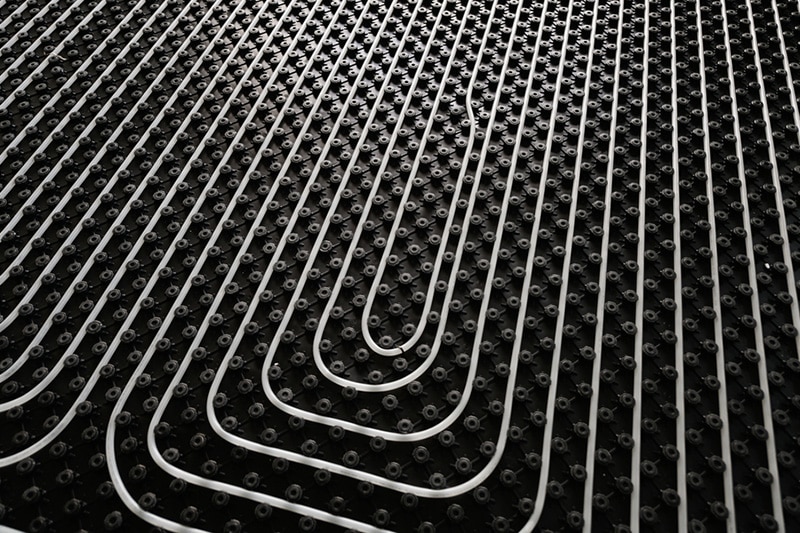
Hydronic radiant floor heating uses hot water circulated through a network of flexible tubing (usually PEX piping) installed beneath the floor. A boiler or water heater heats the water, and a pump circulates it through the tubing loops. As the warm water flows through, it transfers heat to the floor surface above.
This is the most popular choice for whole-house radiant heating, and for good reason. Hydronic systems are incredibly energy-efficient, especially when paired with a high-efficiency boiler or, increasingly, a heat pump water heater. The water temperature typically runs between 80°F and 140°F, depending on the floor covering and desired room temperature.
One significant advantage of hydronic systems is their ability to zone different areas of the home independently. You can have different temperatures in the master bedroom versus the living room, optimizing comfort and energy use simultaneously. We’ve seen these systems provide decades of reliable service with minimal maintenance required.
But, hydronic systems do come with higher upfront installation costs. They require a boiler or dedicated water heater, manifolds to distribute water to different zones, and professional installation. For new construction or major renovations, this investment often pays off over time through lower operating costs.
Electric Systems
Electric radiant floor heating uses electrical resistance cables or mats installed beneath the floor surface. When electricity flows through these elements, they generate heat that warms the floor above. These systems are simpler in design than hydronic setups and significantly easier to install.
Electric systems come in two main forms: loose cables that are woven between floor joists or embedded in thin-set mortar, and pre-assembled mats that roll out like a carpet and are particularly popular for tile installations in bathrooms and kitchens.
The major advantage of electric radiant heating is the lower installation cost, often a fraction of what a hydronic system would run. There’s no boiler to install, no plumbing to run, and the mats can even be a viable DIY project for handy homeowners.
The trade-off? Operating costs. Electricity tends to be more expensive than natural gas or other fuels used to heat water in hydronic systems. This makes electric radiant heating most cost-effective when used in smaller areas or as supplemental heating rather than a whole-house solution. Many homeowners love electric radiant heat in bathrooms or entryways where warm floors provide a noticeable comfort boost without heating the entire house.
The Science Behind Radiant Heat Transfer
To truly understand how radiant floor heating works, we need to talk about the physics of heat transfer. There are three ways heat moves: conduction, convection, and radiation. Radiant floor heating primarily relies on the latter two.
When the heating elements warm the floor, that heat conducts through the flooring material to the surface. This is conduction, direct heat transfer through a solid material. Once the floor surface is warm, radiation takes over.
Radiant heat transfer works through electromagnetic waves, similar to how the sun warms the earth. These infrared waves travel through the air without heating it, instead warming the objects and people they encounter directly. When you stand on or near a radiant-heated floor, you’re absorbing that infrared energy directly, which is why radiant heating feels so comfortable even at lower ambient air temperatures.
There’s also a convection component at play. As the floor warms the air directly above it, that warm air rises naturally (because warm air is less dense than cool air). This creates a gentle, natural circulation pattern in the room, warmer air rising, cooler air settling toward the floor to be warmed in turn. But unlike forced-air systems, this convection is gradual and draft-free.
The result is a unique heat profile. With radiant floor heating, temperatures are warmest at floor level and gradually decrease toward the ceiling. This is actually ideal for human comfort, we prefer our feet to be warm while our heads stay slightly cooler. Traditional heating systems that blow warm air often create the opposite scenario: hot air pools at the ceiling while floors remain cold.
This efficient heat distribution is one reason radiant systems can feel comfortable at thermostat settings 2-4 degrees lower than forced-air systems, translating to real energy savings.
Installation Methods and Considerations
Installing radiant floor heating isn’t a one-size-fits-all proposition. The method used depends on whether you’re working with new construction or retrofitting an existing home, as well as your floor type and system choice.
New Construction and Major Renovations
This is the ideal scenario for radiant floor heating installation. In new construction, hydronic tubing or electric cables can be embedded directly into a concrete slab, a method called “slab-on-grade” installation. The concrete acts as a thermal mass, absorbing and slowly releasing heat for incredibly stable, even temperatures.
Alternatively, tubing can be installed in a thin layer of lightweight concrete poured over a subfloor, or within grooved panels specifically designed for radiant heating applications. These approaches work well for both hydronic and electric systems.
Retrofitting Existing Homes
Adding radiant floor heating to an existing home is more challenging but certainly possible. The most common approach involves installing tubing or heating elements between floor joists from below, useful if you have access to an unfinished basement or crawl space. Aluminum heat transfer plates are typically attached to help distribute heat evenly to the subfloor above.
Another retrofit option uses ultra-thin electric mats that add minimal height to the floor. These can be installed directly beneath new tile, stone, or engineered wood flooring with only about 1/8 inch added thickness.
Floor Covering Considerations
Not all floor coverings work equally well with radiant heating. Tile and stone are excellent conductors and work beautifully over radiant systems. Engineered hardwood is generally compatible, though solid hardwood can be problematic due to expansion and contraction. Carpet acts as an insulator, reducing efficiency, if you must use carpet over radiant heat, choose low-pile options with minimal padding.
Professional Installation Matters
While some electric mat systems are marketed as DIY-friendly, we strongly recommend professional installation for most radiant floor heating projects. Proper system design, including calculating heat loads, spacing tubing correctly, and ensuring adequate insulation beneath the system, makes the difference between an efficient, comfortable system and one that underperforms or wastes energy.
At Aspen Creek Heating & Air, we specialize in radiant floor heating systems alongside our full range of HVAC services. Our experienced technicians can help you determine the right system type and installation method for your specific situation, whether you’re building new or upgrading an existing home.
Benefits and Drawbacks of Radiant Floor Heating
Like any heating system, radiant floor heating comes with its own set of advantages and limitations. Let’s break them down honestly.
Benefits
Energy Efficiency: Radiant heating systems can be 10-30% more efficient than forced-air systems. There’s no ductwork losing heat to unconditioned spaces, and the ability to heat at lower thermostat settings reduces energy consumption.
Superior Comfort: That even, consistent warmth from floor to waist level is hard to beat. No hot blasts of air, no cold spots near windows or exterior walls, no dust blowing around. Many people with allergies prefer radiant heating because there’s no air circulation stirring up allergens.
Silent Operation: Radiant floor heating is essentially noiseless. No rumbling furnaces, no whooshing air handlers, no clicking ductwork.
Design Freedom: Without vents, radiators, or baseboard heaters, you gain complete freedom in furniture placement and room design. This is particularly valuable in modern, open floor plans.
Durability: Properly installed radiant heating systems, especially hydronic ones, can last 30-50 years with minimal maintenance. There are far fewer mechanical components to fail compared to forced-air systems.
Drawbacks
Higher Upfront Cost: Installation costs for radiant floor heating, particularly hydronic systems, run significantly higher than conventional heating systems. This is the biggest barrier for most homeowners.
Slow Response Time: Because radiant systems heat thermal mass (the floor itself), they take longer to reach the desired temperature than forced-air systems. This makes them less suitable for homes where temperatures need to change quickly.
Retrofit Challenges: Installing radiant heating in an existing home often means either raising floor levels or removing existing flooring. This can add complexity and cost to renovation projects.
No Cooling Capability: Unlike heat pumps or central air systems, radiant floor heating only heats. You’ll need a separate cooling solution for summer months. Some hydronic systems can be configured for radiant cooling, but this is uncommon and requires careful humidity management.
Floor Covering Limitations: As mentioned earlier, not all flooring materials are compatible with radiant heating, which may influence your design choices.
Ideal Applications for Radiant Floor Heating
Radiant floor heating isn’t right for every situation, but there are scenarios where it truly shines.
Bathrooms and Kitchens
These tile-heavy spaces are prime candidates for radiant heating. Tile conducts heat beautifully, and there’s something undeniably luxurious about warm floors underfoot when you step out of the shower or stand at the kitchen sink on a cold morning. Electric radiant mats are often used here as supplemental heating, paired with the home’s primary heating system.
New Construction with Concrete Slabs
If you’re building a new home with slab-on-grade construction, embedding hydronic tubing in the concrete is relatively straightforward and cost-effective. The concrete thermal mass provides exceptional heat storage and distribution.
Additions and Renovations
Adding radiant heating to a home addition often makes more sense than extending existing ductwork. It’s also popular in basement conversions where cold concrete floors make traditional heating feel inadequate.
Homes in Cold Climates
Radiant floor heating excels in regions with long, cold winters. The consistent, efficient heat production and superior comfort make it worth the investment. Here in Colorado, where we experience genuine winter weather, we see strong interest in radiant systems among homeowners building new construction or undertaking major remodels.
High-Ceiling Spaces
Rooms with tall ceilings are notoriously difficult to heat with forced-air systems, all that warm air rises and pools uselessly overhead. Radiant floor heating eliminates this problem by keeping warmth where people actually are.
Allergy-Sensitive Households
Families dealing with dust allergies or asthma often find relief with radiant heating. Without forced air circulation, fewer allergens are stirred up and distributed throughout the home.
Supplemental Heating Zones
Even if whole-house radiant heating isn’t in the budget, adding electric radiant heat to specific areas, entryways, bathrooms, home offices, can significantly boost comfort without very costly.
Conclusion
Radiant floor heating represents one of the most comfortable and efficient ways to warm a home. By understanding how radiant floor heating works, using conduction and radiation to warm objects directly rather than blowing hot air around, you can appreciate why so many homeowners are drawn to this system.
The choice between hydronic and electric systems depends on your budget, project scope, and whether you’re heating an entire home or specific rooms. Either way, the benefits of silent, even, allergen-friendly heat are compelling. Yes, the upfront investment is higher than conventional heating, and you’ll still need a separate cooling solution. But for the right application, whether that’s a new construction home in a cold climate or a bathroom renovation where warm tile floors would be a daily luxury, radiant floor heating delivers comfort that traditional systems simply can’t match.
If you’re considering radiant floor heating for your home, or want to explore how it might complement your existing HVAC system, our team at Aspen Creek Heating & Air is here to help. We’ve been serving homeowners throughout Lafayette, Broomfield, Westminster, and the Denver metro area since 2010, and we bring that experience to every consultation. Give us a call to discuss your heating needs and find out whether radiant floor heating is the right choice for your situation.
