
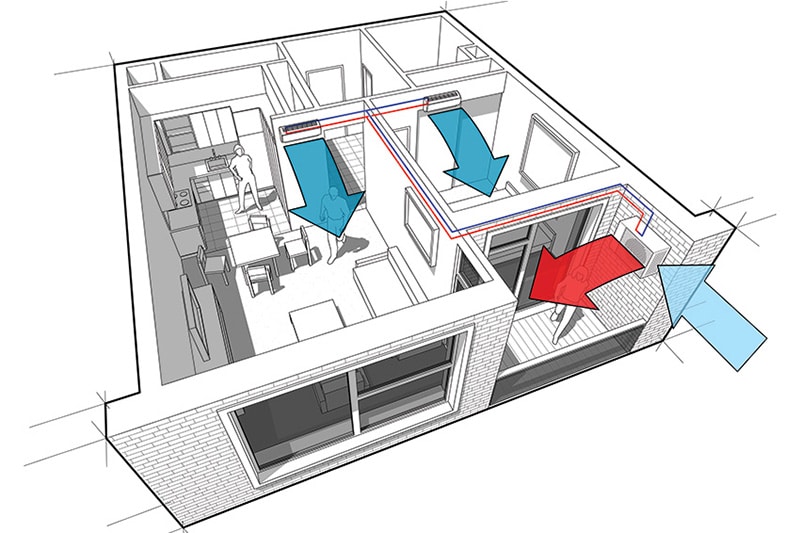
Ever walk from your living room into your bedroom and feel like you’ve crossed into a different climate zone? That temperature swing isn’t just annoying, it’s a telltale sign that something’s off with your ductwork design. And here’s the thing: most homeowners never think twice about the metal pathways hidden behind their walls and ceilings. We get it. Ductwork isn’t exactly glamorous. But when it comes to home comfort and energy efficiency, the design of your duct system might be the single most overlooked factor determining whether you feel comfortable in your own home.
At Aspen Creek Heating & Air, we’ve seen firsthand how properly designed ductwork transforms a home from frustratingly inconsistent to genuinely comfortable. We’ve also seen well-intentioned HVAC installations fall short because the ductwork couldn’t deliver conditioned air where it needed to go. In this guide, we’ll walk you through everything you need to know about how ductwork design impacts your comfort, what problems to watch for, and how to get your system working the way it should.
The Role of Ductwork in Your HVAC System
Think of your HVAC system like your body’s circulatory system. Your furnace or air conditioner is the heart, pumping conditioned air throughout your home. But without properly designed ductwork, the arteries and veins of the system, that air never reaches the rooms that need it.
Ductwork serves two essential functions. First, supply ducts carry heated or cooled air from your HVAC unit to every room in your house. Second, return ducts pull stale air back to the unit to be filtered, conditioned, and recirculated. When both sides of this equation work together, you get consistent temperatures, balanced humidity levels, and efficient energy use.
But here’s where it gets interesting. The design of this duct system, not just the HVAC equipment itself, determines how effectively your home maintains comfort. You could install the most efficient furnace on the market, but if your ductwork is undersized, leaky, or poorly routed, you’ll still end up with hot spots, cold spots, and utility bills that make you wince.
We often tell our customers that ductwork design is the foundation everything else rests on. Get it right, and your HVAC system can deliver uniform temperatures all year round. Get it wrong, and no amount of thermostat adjusting will fix the problem.
Common Ductwork Design Problems That Affect Comfort
Not all ductwork problems are created equal, but they all lead to the same frustrating result: a home that’s too hot in some rooms, too cold in others, and expensive to heat and cool. Let’s break down the most common culprits we see.
Improper Sizing and Airflow Issues
This is probably the biggest mistake we encounter, and it’s more common than you’d think. When ducts are too small for the volume of air they need to carry, the system has to work harder to push air through. The result? Reduced airflow to distant rooms, increased strain on your HVAC equipment, and that annoying whooshing sound that tells you air is moving way too fast through a restricted space.
On the flip side, oversized ducts create their own problems. Air moves too slowly, losing temperature before it reaches its destination. This is especially problematic with cooling, since sluggish airflow can allow condensation to form inside the ducts.
Proper AC duct sizing isn’t about guesswork, it requires careful calculations based on the square footage of each room, the home’s insulation, window placement, and even local climate factors. When we design duct systems, we run Manual D calculations to determine exactly what size each duct run needs to be.
Leaky Ducts and Energy Loss
Here’s a sobering statistic: according to Energy Star, the typical home loses 20-30% of the air moving through its duct system to leaks, holes, and poorly connected segments. That’s conditioned air you’ve already paid to heat or cool, escaping into your attic, crawl space, or wall cavities where it does absolutely nothing for your comfort.
Leaky ducts don’t just waste energy, they can also pull in dust, insulation particles, and other contaminants from unconditioned spaces. If you’ve noticed dustier rooms even though regular cleaning, or if family members seem to struggle with indoor air quality issues, compromised ductwork could be the hidden cause.
Poor Layout and Uneven Temperature Distribution
The path your ductwork takes matters just as much as its size. Every bend, turn, and lengthy straight run creates resistance that reduces airflow. We’ve seen homes where ducts take unnecessarily long, winding routes that could have been avoided with better planning.
Ductwork routed through unconditioned spaces like attics presents particular challenges. In summer, attic temperatures can exceed 130°F, which means your nice 55°F supply air absorbs heat the entire time it travels through that space. By the time it reaches the room, it’s nowhere near as cool as it should be. That’s why we always try to ensure the shortest duct runs possible and attempt to avoid attics for increased efficiency when designing or recommending modifications.
The placement of supply and return registers also plays a critical role. When returns are positioned too close to supply vents, conditioned air gets sucked back into the system before it has a chance to mix with room air. The result is short-cycling, temperature swings, and rooms that never quite feel right.
Signs Your Ductwork Design Needs Attention
So how do you know if your ductwork design is the source of your comfort problems? Here are the red flags we tell homeowners to watch for:
Rooms that are consistently too hot or too cold. If certain areas of your home never seem to reach a comfortable temperature regardless of what you set the thermostat to, ductwork design is a prime suspect.
High utility bills even though efficient equipment. When your HVAC system has to run longer and harder to compensate for duct losses, it shows up on your energy bills. If your costs seem out of line with similar homes in your area, your ducts may be to blame.
Excessive dust accumulation. Leaky return ducts can pull in particulates from unconditioned spaces, distributing dust, pollen, mold spores, and other pollutants throughout your living areas.
Weak airflow from certain vents. Put your hand in front of your supply registers. If some rooms have noticeably weaker airflow than others, there’s likely a sizing problem, obstruction, or leak somewhere in the line.
Humidity problems. Ductwork issues can cause your system to dry out air excessively when heating, or fail to remove enough moisture when cooling. If you’re battling dry skin in winter or muggy rooms in summer, the duct system deserves a closer look.
Strange noises. Whistling, rattling, or popping sounds from your ducts often indicate problems with sizing, connections, or structural integrity.
If any of these sound familiar, it’s worth having a professional evaluate your duct system. What seems like an HVAC equipment problem is often actually a ductwork design issue.
Key Principles of Effective Ductwork Design
Whether you’re building a new home or considering modifications to an existing system, understanding what makes ductwork design effective can help you make better decisions. Here are the principles we follow at Aspen Creek Heating & Air:
Use proper sizing calculations. Every duct run should be sized based on the specific airflow requirements of the rooms it serves. This means using industry-standard Manual D calculations, not rule-of-thumb guesses. Proper AC duct sizing maximizes both cool airflow and energy efficiency.
Map out supply and return registers strategically. Supply vents work best when positioned near exterior walls or under windows, where they can counteract heat loss and gain. Return registers should be placed to promote good air circulation without short-circuiting the supply air.
Keep duct runs short and direct. The longer air has to travel, the more energy it loses along the way. We design systems with the shortest practical duct runs, minimizing bends and avoiding unnecessarily complex routing.
Avoid unconditioned spaces when possible. Running ducts through conditioned areas of the home, or at minimum, insulating them well when attics or crawl spaces can’t be avoided, reduces thermal losses significantly.
Plan for accessibility. This is something many installers overlook, but it’s crucial for long-term performance. We plan the installation area so that it can easily be accessed for maintenance and repairs. Ductwork that’s impossible to reach is ductwork that won’t get properly maintained.
Balance the system. A well-designed duct system delivers the right amount of air to each room, not just the total volume the HVAC equipment produces. This requires careful balancing of airflow throughout the entire network.
Seal everything properly. All connections should be mechanically fastened and sealed with mastic or approved tape. This prevents the leakage that plagues so many existing systems.
How to Improve Your Existing Ductwork
Not everyone has the luxury of starting from scratch with new ductwork. The good news is that many existing duct systems can be improved significantly without a complete replacement.
Duct sealing is often the single most cost-effective upgrade. Professional duct sealing can eliminate most leakage points, improving both comfort and efficiency. We’ve seen homeowners reduce their heating and cooling costs by 15-20% just by addressing leaks.
Adding or relocating registers can help with rooms that consistently run too hot or cold. Sometimes the original design simply didn’t account for how the home would actually be used, and a new supply or return vent makes all the difference.
Insulating ducts in unconditioned spaces reduces thermal losses and helps maintain proper air temperature as it travels through your system. This is especially important for ductwork running through attics or crawl spaces.
Balancing dampers can be adjusted to redirect airflow toward problem rooms. If some areas get too much air while others get too little, damper adjustment is a simple fix that doesn’t require any new equipment.
Duct replacement may be necessary for sections that are severely damaged, improperly sized, or made from materials that have degraded over time. Flexible duct that’s been kinked or crushed, for example, often needs to be replaced rather than repaired.
The right approach depends on your specific situation. We always recommend having a professional assess your system before deciding on a course of action. At Aspen Creek Heating & Air, we offer honest advice on what’s best for your home while keeping costs low, sometimes that means targeted repairs, and sometimes it means a more comprehensive upgrade.
Beyond comfort, improving your ductwork can also address indoor air quality concerns. When ducts are sealed and properly maintained, they’re less likely to distribute pollutants like dust, pollen, and mold spores throughout your home. For families dealing with allergies or respiratory issues, this can make a noticeable difference.
Conclusion
Your ductwork might be out of sight, but its design shouldn’t be out of mind, not when it has such a direct impact on your daily comfort and monthly energy bills. From proper sizing and strategic layout to sealing and insulation, every aspect of duct design plays a role in how well your HVAC system performs.
If you’ve been struggling with inconsistent temperatures, high utility costs, or air quality issues, your ductwork deserves a closer look. Sometimes the problem isn’t your furnace or air conditioner at all, it’s the system that’s supposed to deliver that conditioned air where you need it.
We offer a range of HVAC services at Aspen Creek Heating & Air, including ductwork evaluation, repairs, and new installations. If you’re experiencing problems with your current system, call us today to schedule an appointment. We’ll help you figure out whether your ductwork design is working for you or against you, and what to do about it.
